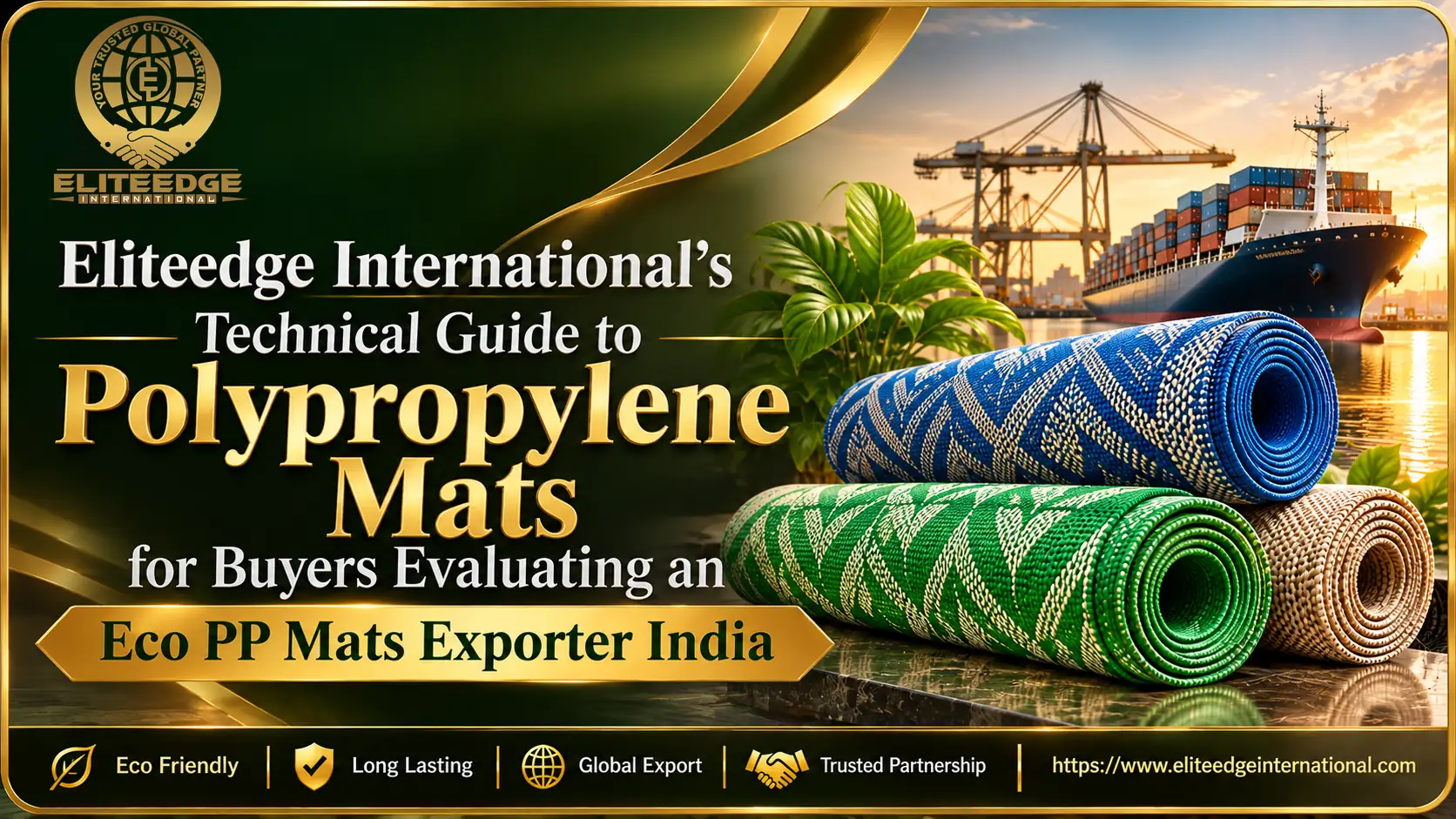
Polypropylene mats appear in nearly every outdoor, camping, picnic, patio, and event flooring category, yet most buyers sourcing them have never been given a clear, plain explanation of what the material actually is, how it behaves under real use, and where its genuine strengths and honest limitations lie. A buyer who understands these fundamentals negotiates better, asks sharper questions, and avoids repeating inaccurate claims to their own customers. When searching for an eco PP mats exporter India businesses can rely on, the most useful starting point is therefore not a marketing label but a working knowledge of polypropylene itself. Eliteedge International, based in Jalgaon, Maharashtra, manufactures and exports polypropylene mats, and believes informed buyers make better long term partners.
This guide explains polypropylene in practical, buyer focused terms, covering how PP mats are generally made, how they perform, what can honestly be said about their environmental profile, and which specifications matter most when sourcing foldable plastic mats wholesale for retail, outdoor, or event use.
What Polypropylene Actually Is and Why It Suits Floor Mats
A Thermoplastic Polymer With Practical Properties
Polypropylene, often abbreviated as PP, is a thermoplastic polymer, which simply means it softens when heated and hardens again as it cools, allowing manufacturers to shape it repeatedly into fibres, strips, and films. This property makes it highly versatile for mat production, since the same base material can be extruded into flat tapes, woven into durable sheets, and finished in many colours and patterns suited to different retail categories. The material is also widely available and consistent in supply, which supports reliable production planning for buyers placing recurring orders.
Why Low Weight Matters for Mats
Polypropylene is one of the lighter commonly used plastics, which gives finished mats a favourable weight relative to their surface area. For buyers, this lightness translates into practical advantages at every stage, from lower freight cost per unit and easier handling in the warehouse to better portability for the end customer carrying a picnic or camping mat to a park, beach, or campsite. A lighter mat also folds more compactly, which supports the storage and shipping efficiency discussed throughout this guidance series.
Moisture Resistance Explained
Unlike natural fibres such as cotton or jute, polypropylene does not absorb water into its structure. Moisture sits on the surface rather than soaking in, which is why PP mats can be wiped, hosed, or shaken dry quickly, and why they resist the mildew and musty odours that affect absorbent materials stored slightly damp. This is the single most important property behind the outdoor suitability of the category, and it explains why polypropylene dominates picnic, beach, and camping mat retail.
How Polypropylene Mats Are Generally Made
Extruding the Raw Material Into Usable Forms
In general terms, polypropylene granules are melted and extruded into thin flat tapes or fibres, which are then cooled and prepared for weaving or construction. Colour is typically introduced at this early stage, often through pigments blended into the material, which helps colour run through the product rather than sitting only on the surface. Buyers who want to understand a specific supplier’s process should simply ask, since methods vary between manufacturers and no single description applies to every factory.
Weaving and Constructing the Mat
The prepared tapes or fibres are then woven or otherwise assembled into mat form, with the weave pattern influencing appearance, flexibility, and how easily the finished mat folds. Tighter constructions generally feel firmer, while more open constructions can feel lighter and allow sand, dust, and water to pass through more freely, a feature many camping and beach buyers actively look for.
Finishing, Edging, and Packaging
Finishing steps typically include trimming to size, securing the edges so they resist fraying, and preparing the mats for folding and packing. Edge quality is worth inspecting closely on any sample, since a poorly finished edge is often the first place wear appears under repeated outdoor use. Packaging also deserves attention, because how a mat is folded and packed affects both shipping efficiency and the first impression a customer receives on opening the product.
Performance Characteristics Buyers Should Understand
Durability Under Repeated Folding and Use
Well made polypropylene mats tolerate repeated folding, rolling, and outdoor handling better than many alternatives, which is why the category dominates camping and picnic retail. Buyers should still test samples by folding and unfolding them many times and checking for cracking, edge separation, or flattening along fold lines before committing to a bulk order. This simple physical test often reveals more about real world durability than any written specification.
UV Exposure and the Role of Stabilisers
Sunlight is the most significant long term stress on polypropylene. Untreated polypropylene can become brittle and fade after sustained UV exposure, which is why manufacturers of outdoor products often include UV stabilising additives in the material. Buyers sourcing mats intended for semi permanent garden or patio placement should ask directly whether UV stabilisation is used and request any supporting information, rather than assuming every PP mat performs equally under constant sun.
Heat Sensitivity
Polypropylene has a reasonable heat tolerance for everyday outdoor use, but it can soften or deform when exposed to very high temperatures, such as contact with a hot barbecue, a fire pit edge, or a vehicle interior baking in direct summer sun. Honest product guidance for end customers should mention this limitation, since it prevents avoidable complaints and returns and builds trust with customers who appreciate straightforward advice.
Cleaning and Stain Behaviour
The non absorbent surface of polypropylene makes everyday cleaning straightforward, with most spills wiping away before they can set. Strongly pigmented substances can still leave marks on lighter colours over time, so retailers marketing white or pale designs should set realistic expectations about long term appearance under heavy outdoor use.
Specifications That Matter When Comparing PP Mats
Weight and Thickness
Weight and thickness together influence how a mat feels, how it folds, and how it performs underfoot. A heavier, thicker mat generally feels more substantial and lies flatter in light wind, while a lighter mat prioritises portability. Buyers should decide which balance suits their customers and then confirm the actual weight and thickness of each sample rather than relying on descriptive words such as premium or heavy duty, which carry no fixed meaning.
Size Options and Consistency
Common mat sizes vary widely across markets, and consistency matters as much as the nominal dimension. A batch where individual mats differ noticeably in size creates awkward problems for retailers and, for event buyers, for laying mats together neatly. Buyers should confirm tolerance for sizing across a production run and check that approved sample dimensions match what later production delivers.
Colour Consistency and Print Quality
Colour is a major purchase driver for mats, so consistency across production runs matters. Buyers should compare approved samples against early production photographs and, for printed designs, check that patterns are properly aligned and not smudged. When reordering a design, it is sensible to request confirmation that colour will match the original approved reference.
Honest Environmental Facts About Polypropylene
Polypropylene Is Not Biodegradable
Polypropylene is a petroleum derived plastic and does not biodegrade in any meaningful timeframe. Any supplier or retailer describing a standard polypropylene mat as biodegradable or compostable is making a claim that does not hold up, and buyers should treat such language as a warning sign regardless of how attractive it might look in a listing.
Recyclable in Many Systems, With Local Variation
Polypropylene is identified by resin code number five and is accepted for recycling in many municipal and industrial systems, though acceptance varies considerably by region and by the specific form of the product. A mat is not automatically recycled simply because the material is technically recyclable, so buyers and retailers should describe this property accurately as recyclability where facilities exist, not as a guaranteed outcome.
Durability as a Genuine Environmental Argument
The most defensible environmental point for a well made PP mat is longevity. A mat that survives many seasons of use reduces the number of replacement products a customer needs over time, compared with a cheaper alternative that fails quickly. This is a real, if modest, benefit, and it can be communicated honestly without overstating anything.
What the Word Eco Should and Should Not Mean
Because the term eco is not legally defined in most markets, buyers should ask any eco PP mats exporter India supplier to explain precisely what the word means in their context. In the most honest usage, it refers to durability, reusability, and end of life recyclability rather than biodegradability or recycled content, and buyers should not assume recycled input material unless a supplier confirms it in writing for a specific product.
Questions Buyers Should Ask Any Supplier About PP Mats
A thoughtful buyer asks about the intended end use of each design, whether UV stabilisation is applied, how the edges are finished and tested, what folding durability testing has been done, what the typical weight and thickness are, and whether colours are consistent across production runs. Buyers should also ask for a physical sample of each shortlisted design, since photographs cannot reveal stiffness, edge quality, or the way a mat behaves after repeated folding. Clear, specific answers signal a supplier who understands their own product, while vague reassurance deserves further probing.
Matching PP Mat Specifications to End Use
Camping and Picnic Mats
For camping and picnic use, buyers should prioritise low weight, compact folding, easy cleaning, and a surface that sheds sand and moisture. Design appeal matters, but practical performance in damp, dusty, or sandy conditions should lead the specification.
Patio and Garden Mats
For semi permanent outdoor placement, UV resistance, colour stability, and edge durability become far more important, since the mat will face continuous sun and weather rather than occasional use. Buyers should be more demanding about stabilisation and testing for this category.
Events and Temporary Flooring
For event and festival use, buyers should consider how the mat handles heavy foot traffic, repeated laying and lifting, and quick cleaning between uses. Consistent sizing across a large order matters here, since mats need to lie together neatly across a space.
Sourcing Polypropylene Mats With Eliteedge International
Buyers can review the full eco PP mats exporter India catalogue, which spans multicolour, black and white, blue and white, pink, and printed designs, and request samples of the specific designs relevant to their market. Buyers interested in how the company operates as a manufacturer and exporter can learn more about its approach to foldable plastic mats wholesale supply, including custom branding and worldwide shipping.
Conclusion
Polypropylene mats earn their popularity through low weight, moisture resistance, easy cleaning, and durability under repeated outdoor use, while carrying honest limitations around UV exposure over time, heat sensitivity, and end of life, since the material is recyclable where facilities exist but not biodegradable. Buyers who understand these facts source more confidently, match specifications to real end use, and describe products to their own customers accurately. Working with an eco PP mats exporter India that is willing to discuss the material transparently, as Eliteedge International aims to do, gives retailers a firmer foundation for long term success.
If your business wants to discuss polypropylene mat specifications for your market, reach out to the team through the contact page to request samples and a tailored quotation.