Green Carpet Manufacturing: A Sustainable Choice for Importers
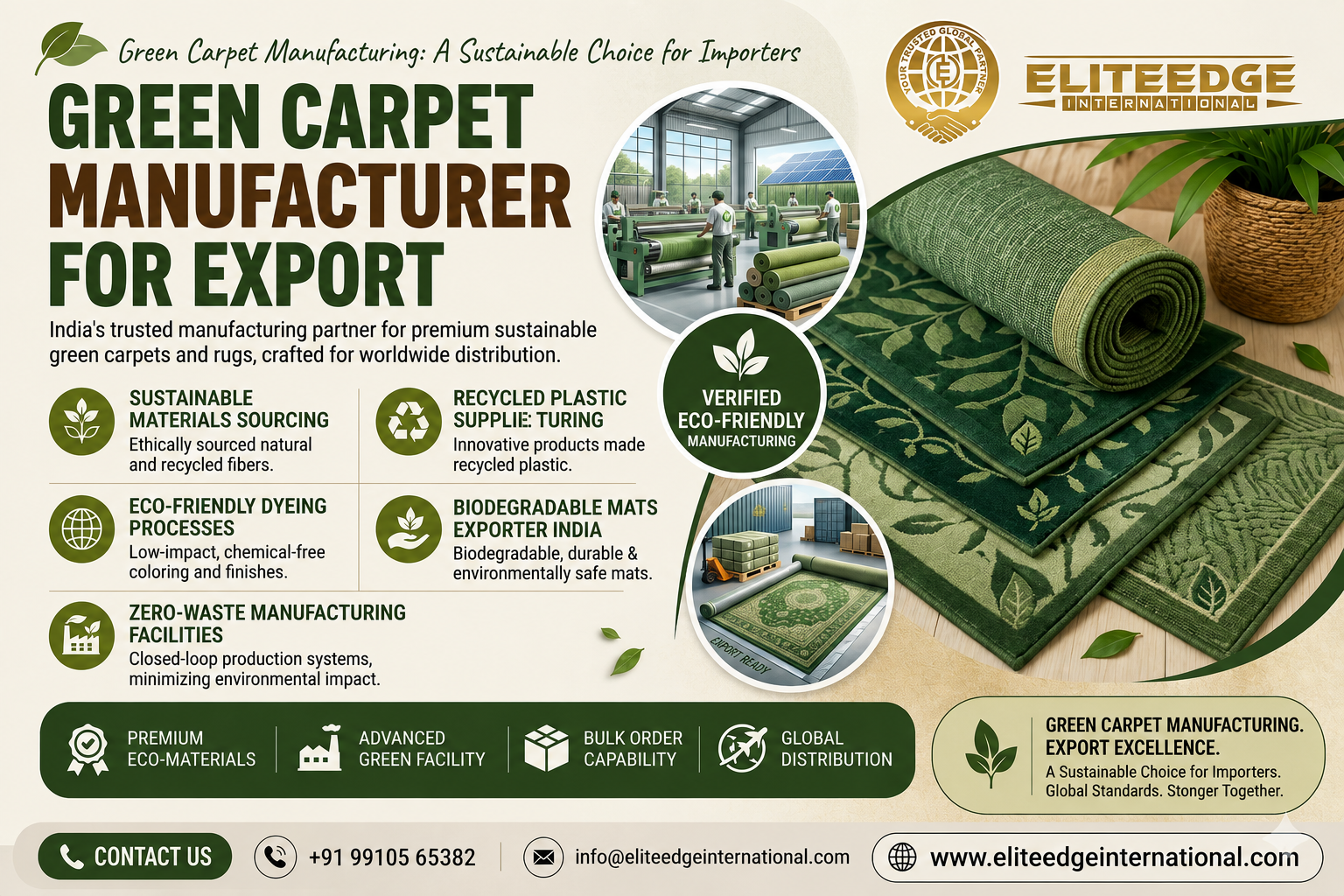
The global flooring industry is undergoing a remarkable transformation as sustainability becomes a central factor in purchasing decisions. Businesses, retailers, architects, and hospitality brands are increasingly searching for products that reduce environmental impact while maintaining exceptional quality. This shift has created significant opportunities for every green carpet manufacturer for export that invests in eco-friendly production methods, recycled materials, and responsible manufacturing. Buyers no longer focus solely on price; they also evaluate environmental responsibility, product certifications, and supply chain transparency before selecting suppliers.
Understanding Green Carpet Manufacturing
Green carpet manufacturing refers to producing carpets using environmentally responsible materials, sustainable production methods, and energy-efficient technologies. Unlike conventional manufacturing, eco-friendly production minimizes pollution, conserves natural resources, and reduces waste throughout the manufacturing cycle.
A sustainable carpet may incorporate recycled polypropylene, recycled PET fibers, organic wool, jute, cotton, sisal, or biodegradable natural fibers. Many manufacturers also replace harmful chemical dyes with low-impact or vegetable-based dyes while improving wastewater treatment systems and reducing carbon emissions.
Consumers today recognize that sustainability is not simply a marketing trend. Hotels, commercial buildings, residential developers, and retailers increasingly demand flooring products that support healthier indoor environments and responsible sourcing. Importers benefit by partnering with manufacturers that align with these expectations.
Why Importers Are Choosing Green Carpet Manufacturers
Importers understand that sustainability creates a competitive advantage. Modern consumers actively seek products with lower environmental impact, encouraging retailers to source carpets from responsible manufacturers.
Some of the biggest benefits include:
|
Benefit |
Value for Importers |
|
Eco-friendly branding |
Improves customer trust |
|
Premium product positioning |
Higher perceived value |
|
Easier compliance |
Meets international environmental regulations |
|
Long-term partnerships |
Builds stronger relationships with buyers |
|
Reduced environmental footprint |
Supports ESG initiatives |
Sustainable carpets also help distributors participate in green building projects, hospitality developments, and environmentally conscious retail programs. Many commercial buyers now include sustainability requirements in procurement contracts, making eco-friendly manufacturing an important differentiator.
Sustainable Raw Materials Used in Green Carpet Manufacturing
The foundation of every environmentally responsible carpet begins with carefully selected raw materials.
Natural fibers remain among the most preferred options because they are renewable and biodegradable. Wool offers exceptional durability, natural stain resistance, and comfort. Jute grows rapidly with minimal environmental impact, making it an attractive sustainable alternative. Cotton provides softness while supporting renewable agricultural production when responsibly sourced.
Recycled materials are becoming equally important. Recycled polypropylene and PET fibers transform post-consumer plastic waste into durable carpets suitable for residential and commercial applications. These materials reduce landfill waste while preserving performance characteristics expected by international buyers.
Manufacturers are also exploring renewable backing materials, biodegradable latex compounds, and environmentally safer adhesives to further reduce product impact throughout the carpet lifecycle.
Eco-Friendly Manufacturing Processes
Sustainable manufacturing extends beyond raw materials. Modern carpet factories increasingly adopt technologies that reduce energy consumption, water usage, and industrial waste.
Energy-efficient weaving equipment minimizes electricity consumption without compromising production capacity. Solar power installations, LED lighting systems, and automated production controls further improve operational efficiency.
Water conservation has become another major priority. Advanced dyeing technologies require significantly less water than traditional methods, while wastewater recycling systems allow manufacturers to reuse treated water during production.
Waste reduction initiatives include recycling production scraps, optimizing cutting layouts, and reusing packaging materials wherever possible. These improvements lower production costs while supporting international sustainability goals.
Government initiatives are also encouraging Indian manufacturers to adopt environmentally responsible production methods and improve global competitiveness through sustainable manufacturing practices.
Benefits for International Importers
Working with a green carpet manufacturer for export provides advantages beyond environmental responsibility.
Importers gain access to premium product categories that appeal to retailers, hotels, architects, interior designers, and commercial developers seeking sustainable flooring solutions.
Eco-friendly products frequently command stronger customer loyalty because buyers appreciate responsible manufacturing practices. Sustainability also supports participation in green building certifications such as LEED and similar environmental programs.
From a financial perspective, durable eco-friendly carpets often deliver lower lifecycle costs through extended product longevity, reduced maintenance requirements, and improved customer satisfaction.
India's expanding sustainable manufacturing ecosystem provides importers with access to competitive pricing, skilled craftsmanship, extensive customization, and reliable export capabilities.
How to Choose the Right Green Carpet Manufacturer for Export
Selecting the right green carpet manufacturer for export requires a comprehensive evaluation that goes far beyond comparing product prices. Importers should assess the supplier's manufacturing experience and export history to ensure they have a proven track record in serving international markets. It is equally important to evaluate the manufacturer's production capacity, quality control procedures, and sustainability certifications, as these reflect their ability to deliver consistent, eco-friendly products that meet global standards. Transparency in material sourcing, along with the ability to offer customization, private labeling, and OEM services, is another key consideration for businesses looking to differentiate their product offerings. Additionally, reliable packaging standards, on-time delivery performance, and responsive customer support play a vital role in ensuring a smooth import process and building a successful long-term business partnership.
Future of Sustainable Carpet Manufacturing
Sustainability is expected to shape the future of the global carpet industry.
Manufacturers continue investing in recycled materials, biodegradable fibers, renewable energy, AI-driven quality inspection, automated manufacturing, and circular economy initiatives that reduce waste across the entire product lifecycle.
Market research indicates that India's carpet market continues to expand steadily, supported by export demand, growing domestic consumption, and increasing interest in sustainable flooring solutions. Industry analysts project continued growth over the coming years as environmental awareness increases worldwide.
For importers, partnering with environmentally responsible manufacturers today creates long-term advantages as sustainability regulations become more stringent across international markets.
Conclusion
Green carpet manufacturing is no longer a niche concept—it has become a strategic business advantage for manufacturers and importers alike. By combining sustainable materials, environmentally responsible production processes, internationally recognized certifications, and consistent product quality, a green carpet manufacturer for export can meet the evolving expectations of global buyers while contributing to a healthier planet.
As international demand for eco-friendly flooring continues to grow, importers who prioritize sustainable sourcing will be better positioned to serve environmentally conscious customers, strengthen their brand reputation, and build resilient supply chains. Choosing the right manufacturing partner today is an investment in long-term business success and a more sustainable future.
Frequently Asked Questions
1. What is a green carpet manufacturer?
A green carpet manufacturer produces carpets using sustainable materials, eco-friendly processes, energy-efficient technologies, and environmentally responsible practices.
2. Why are sustainable carpets becoming popular?
Consumers, businesses, and governments increasingly prefer environmentally friendly products that reduce waste, conserve resources, and improve indoor environmental quality.
3. Which materials are commonly used in eco-friendly carpets?
Common materials include wool, jute, cotton, sisal, recycled polypropylene, recycled PET fibers, and other renewable or recycled materials.
4. What certifications should importers look for?
Importers should consider certifications such as ISO 14001, Global Recycled Standard (GRS), OEKO-TEX®, GoodWeave, and REACH compliance, depending on the target market.
5. Why is India a preferred destination for sustainable carpet sourcing?
India offers skilled craftsmanship, competitive manufacturing costs, strong export infrastructure, growing adoption of sustainable production practices, and remains the world's leading exporter of handmade carpets.