The weaving equipment behind a rug shapes nearly every characteristic buyers care about, from production speed and unit cost through to the subtle texture irregularities that give a genuinely handmade product its distinctive character, yet this fundamental production choice rarely gets the attention that color and pattern selection receive in a typical sourcing conversation. Finding a genuine handloom rugs manufacturer India partner means understanding what handloom weaving actually involves, how it differs from power loom production in ways that matter for your specific retail positioning, and when each approach genuinely fits a given product line. This guide explains the practical differences between these two production methods, what buyers should expect in terms of cost and lead time for each, and how to verify which method a specific manufacturer actually uses, so a sourcing decision rests on accurate technical understanding rather than marketing language alone.
At Eliteedge International, both handloom and power loom production are offered with transparent documentation of which method applies to a given design, since buyers building a retail assortment around specific craftsmanship claims need to know exactly which production method backs those claims before repeating them to their own customers.
What Handloom Weaving Actually Involves
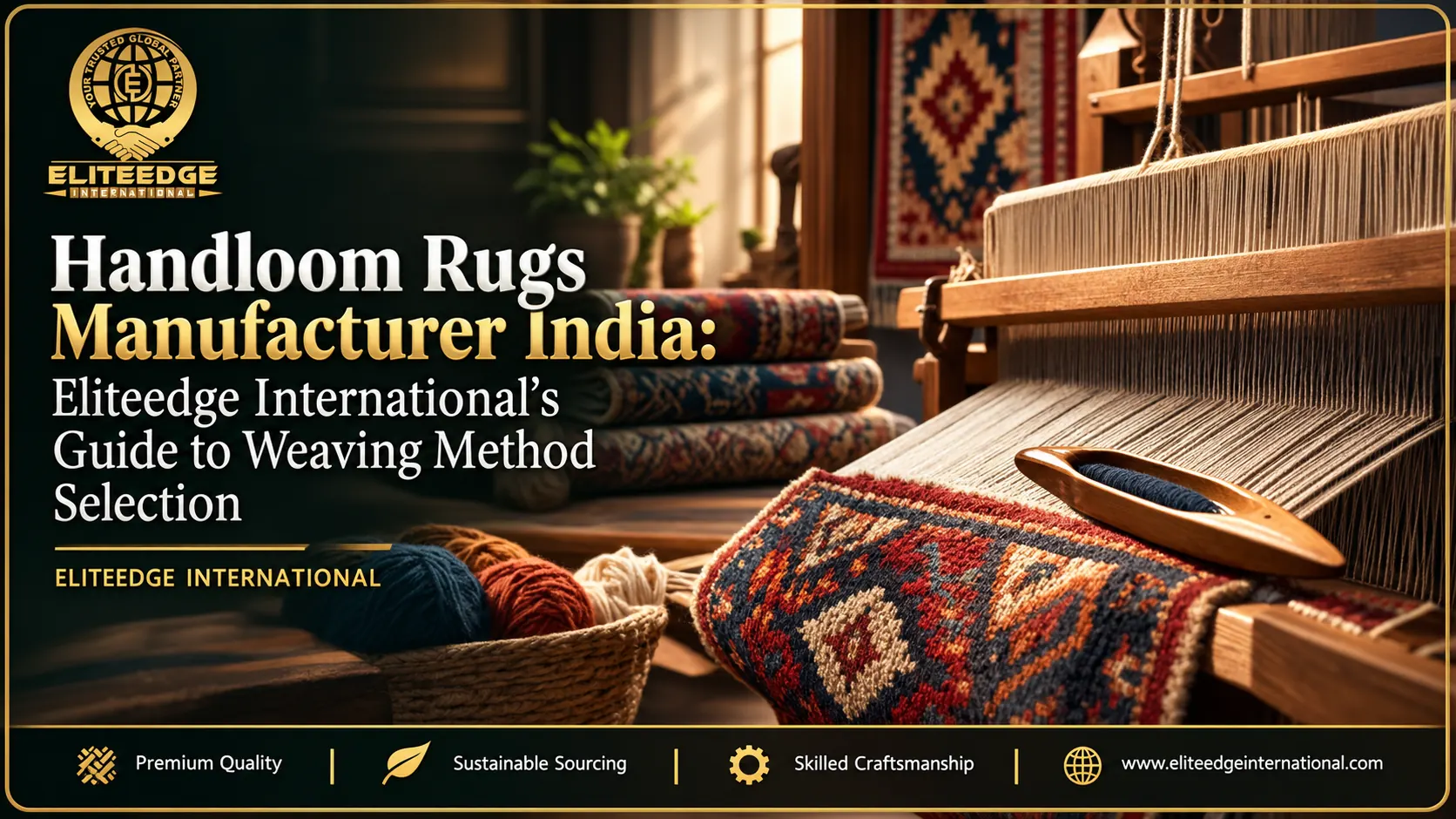
Handloom weaving uses a manually operated loom where an artisan controls the weft insertion, beating, and overall weaving process by hand, relying on physical skill and experience to maintain consistent tension and pattern accuracy throughout production rather than a mechanized system automating these steps. This manual process naturally introduces subtle, characteristic irregularities in weave density and pattern alignment that many buyers and end customers specifically value as evidence of genuine handcraftsmanship, distinguishing a handloom product from the more mechanically uniform appearance of power loom output. These irregularities are not defects but rather the visible signature of human hands guiding every part of the production process.
The Skill and Time Investment Behind Handloom Production
Handloom weaving requires considerably more skilled labor time per unit of output compared to power loom production, since the artisan personally controls every weft insertion rather than a machine executing this repetitive motion at mechanized speed. This labor intensity is precisely why handloom products command a price premium over power loom equivalents, reflecting genuine additional labor cost rather than an arbitrary craftsmanship markup applied without underlying justification. Buyers who understand this cost driver can explain the premium honestly to their own customers rather than relying on vague appeals to tradition alone.
Regional Handloom Weaving Traditions in India
India maintains numerous regional handloom weaving traditions, each associated with specific pattern styles, material preferences, and techniques passed down through generations of weaving families in particular geographic areas, contributing to the country's overall reputation as a major source of authentic handwoven textile products. Buyers interested in a specific regional tradition or technique should ask their manufacturer directly about the specific weaving heritage behind a given design, since this provenance detail can add genuine marketing value beyond the basic handloom versus power loom distinction, giving retail customers a richer story than a simple construction method label alone provides.
Power Loom Carpet Exporter India: Understanding the Mechanized Alternative
Working with a power loom carpet exporter India partner means sourcing from a mechanized weaving process where a machine automates the weft insertion and beating functions that an artisan performs manually in handloom production, dramatically increasing production speed and consistency at the cost of the subtle handmade character some buyers specifically seek. Neither approach is inherently superior, and the right choice depends entirely on what a specific product line and customer segment actually values.
Consistency and Speed Advantages of Power Loom Production
Power loom production achieves considerably more uniform weave density and pattern accuracy than handloom weaving, since a mechanized process eliminates the natural variation inherent in manual artisan work, which can be a genuine advantage for buyers prioritizing precise, consistent reproduction of a design across a large production run. This consistency, combined with dramatically faster production speed, generally translates into lower unit cost and shorter lead times compared to an equivalent handloom design, making power loom production a practical choice for buyers whose customers prioritize value and consistency over handmade provenance.
When Power Loom Production Genuinely Fits a Retail Strategy
Power loom production suits buyers prioritizing cost efficiency, fast turnaround, and precise design consistency across a large volume order, particularly for a retail segment where customers are not specifically seeking or willing to pay a premium for handmade character. Eliteedge International's handloom rugs manufacturer India catalog includes both production methods, letting buyers choose based on their specific retail positioning and price point requirements rather than being locked into a single production approach across their entire assortment.
Environmental and Labor Considerations Across Both Methods
Buyers increasingly ask about labor practices and environmental impact across their entire supply chain, and this scrutiny applies to both handloom and power loom production, though the specific considerations differ meaningfully between the two methods given their fundamentally different production processes. Handloom weaving, being labor intensive by nature, raises questions around fair wages and working conditions for the artisans involved, while power loom production, being more energy and machinery intensive, raises different questions around energy source and equipment maintenance practices. Neither set of questions should be treated as an afterthought in a thorough buyer due diligence process.
Fair Labor Practices in Handloom Weaving Communities
Buyers sourcing handloom products should ask their manufacturer about wage practices and working conditions for the weaving artisans involved, since this labor intensive production method depends entirely on skilled human labor rather than machinery, making fair treatment of these artisans a genuine ethical consideration alongside the craftsmanship story that often accompanies handloom marketing. A manufacturer transparent about their labor practices and willing to discuss this topic openly is generally a stronger long term partner than one who avoids the question or deflects it with vague reassurance not backed by specific detail.
Energy Considerations for Power Loom Operations
Power loom operations, being more energy intensive given their mechanized nature, can be evaluated on energy source and efficiency practices, with buyers increasingly interested in whether a manufacturer has invested in more efficient equipment or renewable energy sources for their power loom operations. Eliteedge International can discuss both labor practices for handloom production and energy considerations for power loom operations as part of a buyer's broader supply chain due diligence process, providing whatever level of detail a specific buyer's own compliance or sustainability reporting requires.
Verifying Which Production Method a Specific Manufacturer Actually Uses
The terms handloom and handmade are sometimes used loosely in marketing materials without precise technical accuracy, making it worth asking a manufacturer directly and specifically which weaving method produces a given design rather than relying on general product descriptions that may not distinguish clearly between handloom, hand tufted, hand knotted, and power loom construction, each of which represents a genuinely different production process covered across this broader guide series. Conflating these distinct methods under a single vague handmade label does a disservice to buyers trying to make an informed, accurate sourcing decision, and it ultimately undermines trust once a customer discovers the discrepancy.
Physical Indicators That Help Distinguish Weaving Methods
Examining a physical sample closely often reveals subtle indicators of the production method used, with handloom pieces typically showing slight, characteristic irregularities in weave density or pattern alignment that a power loom product's mechanical precision simply does not replicate. Buyers developing expertise in this distinction benefit from comparing samples of confirmed handloom and power loom pieces side by side, building the kind of practical evaluation skill that supports confident sourcing decisions independent of a manufacturer's own claims. This hands on skill, once developed, remains useful across every future sourcing relationship a buyer establishes in this category.
Requesting Documentation to Support Marketing Claims
Retailers marketing a product specifically as handloom or handwoven should confirm this claim is accurate before repeating it to their own customers, since an inaccurate craftsmanship claim carries genuine reputational risk if a knowledgeable customer identifies the discrepancy. Eliteedge International provides clear documentation of production method for every design, supporting accurate retail marketing claims rather than leaving buyers to guess or repeat an unverified assertion to their own customer base. This documentation discipline protects both the retailer's credibility and the end customer's trust in the specific craftsmanship story being told.
How Eliteedge International Supports Buyers Across Both Production Methods
Eliteedge International, based in Jalgaon, Maharashtra, produces both handloom and power loom rugs alongside its hand tufted, hand knotted, and polypropylene mat catalogs, with clear documentation identifying which specific production method applies to each design. The team can advise on which method best fits a buyer's specific price point, timeline, and craftsmanship positioning requirements, drawing on direct production experience across both approaches and a willingness to discuss labor and sourcing practices openly for either category.
Buyers can request production method documentation and comparative samples before committing to a bulk order, along with details on labor practices for handloom production or energy considerations for power loom operations. Reach out as a power loom carpet exporter India partner to start the conversation with the export team directly.
Buyers building a diversified rug catalog often find value in offering both handloom and power loom options within the same broader assortment, using handloom pieces to anchor a premium, craftsmanship focused tier and power loom pieces to serve a more price sensitive segment with faster turnaround needs. Sourcing both categories from a single manufacturer relationship, where clear documentation distinguishes each product's actual production method, simplifies vendor management while still giving retail customers an honest, accurately labeled choice across genuinely different price and craftsmanship tiers. This tiered approach, applied consistently and transparently, tends to build stronger long term customer trust than blurring the distinction between these two genuinely different production methods.
Frequently Asked Questions
What is the actual difference between handloom and power loom carpet production?
Handloom weaving uses a manually operated loom where an artisan personally controls weft insertion, beating, and the overall weaving process by hand, while power loom production uses a mechanized loom that automates these same functions at considerably faster speed and with more mechanical consistency. Handloom production introduces subtle, characteristic irregularities in weave density and pattern alignment that many buyers value as evidence of genuine handcraftsmanship, while power loom production achieves more uniform, precisely repeated results across a large production run. These differences translate into genuine practical trade offs including production speed, unit cost, and the specific aesthetic character of the finished product, making the right choice dependent on a buyer's specific retail positioning and price point rather than one method being universally superior.
Why does handloom production cost more than power loom production?
Handloom weaving requires considerably more skilled labor time per unit of output compared to power loom production, since an artisan personally controls every weft insertion rather than a machine executing this repetitive motion at mechanized speed. This labor intensity translates directly into higher production cost, which is why handloom products command a genuine price premium over power loom equivalents reflecting actual additional labor investment rather than an arbitrary craftsmanship markup. Buyers should factor this cost difference into their retail pricing strategy and communicate the genuine labor story behind a handloom product honestly to customers, since this authentic explanation supports the premium price point more effectively than vague craftsmanship language alone.
What is the minimum order quantity for a handloom rugs manufacturer India relationship?
Minimum order quantities for handloom production tend to be lower in unit count than power loom minimums, given the labor intensive nature of handloom weaving and the correspondingly higher value each individual piece represents, though the total order value can still be substantial even at a modest unit quantity. Power loom production, by contrast, often supports higher volume orders more efficiently given the mechanized production speed, sometimes with correspondingly higher minimum order requirements to justify production setup. Sharing your target quantity, preferred production method, and design requirements directly with the manufacturer allows them to quote an accurate minimum for your specific situation. Many buyers start with a smaller trial order in either category to confirm quality before committing to a larger repeat program.
How can I verify that a rug marketed as handloom is genuinely produced that way?
Ask the manufacturer directly and specifically which weaving method produces a given design, since terms like handloom and handmade are sometimes used loosely in marketing materials without precise technical accuracy, and request documentation confirming the specific production method used. Examining a physical sample closely often reveals subtle indicators, with handloom pieces typically showing slight, characteristic irregularities in weave density or pattern alignment that a power loom product's mechanical precision does not replicate. Comparing samples of confirmed handloom and power loom pieces side by side helps build the practical evaluation skill needed to verify these claims independently over time. Requesting a video walkthrough of the actual production process, if a factory visit is not practical, provides additional verification beyond a manufacturer's written claim alone.
Does power loom production mean lower quality compared to handloom?
Not necessarily, since power loom production achieves genuinely high quality results through mechanical consistency and precision, particularly for designs where uniform, exact pattern reproduction matters more than the subtle handmade character that handloom weaving introduces. Quality in this context is less about one method being objectively superior and more about matching the right production method to a specific retail positioning and customer expectation. A well executed power loom product can be an excellent choice for a buyer prioritizing cost efficiency, consistency, and faster turnaround, just as a well executed handloom product suits a buyer specifically targeting customers who value genuine handcraftsmanship and are willing to pay accordingly. Buyers should evaluate quality within each production method's own standards rather than assuming one method inherently produces a better result than the other.
Can I request the same design in both handloom and power loom versions?
In some cases, yes, though this depends on whether the specific pattern and complexity translate well to both production methods, since certain intricate designs may only be practically achievable through handloom weaving while simpler geometric patterns often work well in either method. Discussing your specific design with the manufacturer helps determine whether producing it in both methods is feasible and what the resulting cost and lead time difference would be between the two versions. This approach can be a useful strategy for offering the same visual design across two different price tiers within a retail assortment, giving customers a choice between a premium handloom version and a more accessible power loom alternative. Requesting samples of both versions, where feasible, allows for a direct comparison before committing to stocking either or both options.
How does lead time differ between handloom and power loom orders?
Handloom production generally requires a considerably longer lead time than power loom production, given the labor intensive, artisan driven nature of the weaving process compared to the mechanized speed a power loom achieves. Buyers planning a retail launch or restocking schedule should factor this lead time difference into their planning, particularly for handloom orders where production timelines can extend significantly longer than buyers accustomed to faster categories might initially expect. Requesting a specific production timeline for your exact design and quantity from your manufacturer, rather than assuming a general industry average applies, gives the most accurate planning basis for either production method. Buyers with tight timeline requirements should discuss power loom options specifically if handloom lead times do not fit their launch schedule.
Does Eliteedge International offer both handloom and power loom production options?
Yes, the company produces both handloom and power loom rugs alongside its hand tufted, hand knotted, and polypropylene mat catalogs, with clear documentation identifying which specific production method applies to each design in the catalog. The team can advise on which method best fits a buyer's specific price point, timeline, and craftsmanship positioning requirements based on their particular retail strategy. Buyers can request production method documentation and comparative samples before committing to a bulk order, allowing direct comparison between the two approaches for a specific design or product line. Sharing your target price point, timeline, and craftsmanship positioning goals early in the conversation helps the team recommend the most appropriate production method for your specific situation.
Conclusion
Sourcing from a genuine handloom rugs manufacturer India partner means understanding exactly what production method backs a specific design, since handloom and power loom construction carry genuinely different cost, timeline, and craftsmanship implications that directly affect how a product should be positioned and priced at retail. Eliteedge International documents production method transparently across both categories, alongside its broader hand tufted, hand knotted, and polypropylene mat catalogs, and can discuss labor and energy practices behind either approach for buyers conducting their own supply chain due diligence. Whether you are building a premium handloom collection or a cost efficient power loom line, the production team is ready to walk through method selection, documentation, and pricing with you directly.
If you are ready to request samples or discuss a full export quote, reach out for power loom carpet exporter India pricing and describe your target product, quantity, and destination market. The team will respond with documentation, lead times, and sample availability so you can move forward with confidence, whichever production method best fits your specific retail strategy.