Introduction: The New Digital Age of Global Trade
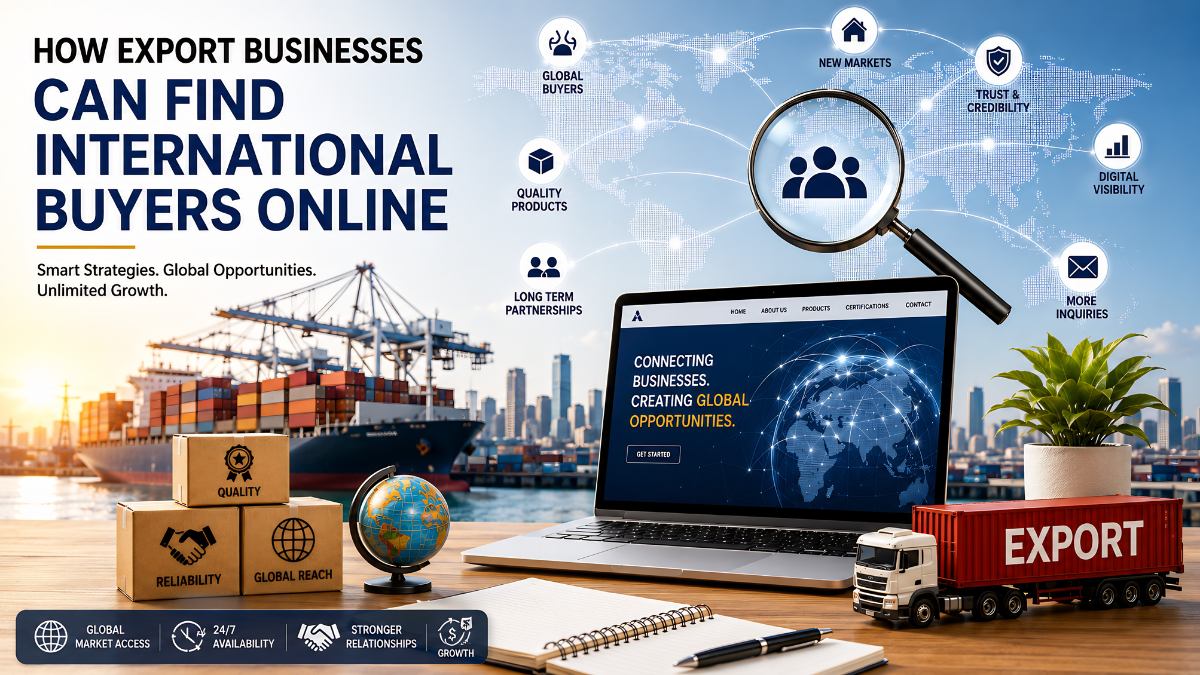
The global business environment has changed more rapidly in the last decade than it did in many decades before it. International trade, which once depended heavily on exhibitions, overseas visits, trade associations, physical meetings, and printed catalogs, is now increasingly driven by technology and digital platforms. In 2026, the process of finding international buyers is no longer limited to attending trade fairs or building networks through traditional channels. The internet has transformed global commerce and created opportunities for businesses of all sizes to reach buyers across borders.
Today, international buyers conduct extensive research before contacting suppliers. Importers, wholesalers, distributors, retailers, and sourcing agents no longer rely solely on business referrals. Instead, they search online, compare suppliers, analyze product quality, study company profiles, and evaluate digital presence before making purchasing decisions.
This shift has changed the rules of export business. A company operating from a manufacturing city in India can now generate inquiries from buyers in the United States, Europe, Australia, Canada, the Middle East, or Southeast Asia without ever leaving its office. Businesses that understand how to build digital visibility are discovering that online platforms often generate more opportunities than many traditional marketing methods.
Finding international buyers online is no longer simply a business strategy. It has become a fundamental requirement for export growth.
Understanding How International Buyers Think Before They Purchase
To successfully find buyers online, exporters first need to understand how international purchasing decisions are made.
Modern buyers are highly informed. Before contacting suppliers, they often spend days or even weeks conducting detailed research. They compare products, review supplier credibility, evaluate pricing structures, and study manufacturing capabilities. Buyers seek confidence because international transactions involve risks, especially when dealing with suppliers located in different countries.
When international buyers begin researching, they are not simply searching for products. They are searching for trust, reliability, quality assurance, and long-term partnerships.
A buyer searching for handmade carpets, textile products, furniture, industrial equipment, or consumer goods often starts with search engines. They enter highly specific search terms that describe products and supplier requirements.
If an exporter appears during this research stage, the chances of receiving inquiries increase significantly. If the business remains invisible online, opportunities may go directly to competitors.
Visibility creates discovery, and discovery creates business opportunities.
Why a Professional Website Has Become the Foundation of Export Growth
A website has become much more than a business brochure. It now acts as the global face of a company.
For many international buyers, a website creates the first impression before any conversation begins. Buyers often judge professionalism based on design quality, information structure, content presentation, and overall user experience.
When a buyer visits an export company website, they immediately begin evaluating the business. They look for signals that indicate legitimacy and capability.
They want to understand who the company is, what products it manufactures, where it exports, how experienced it is, and whether it appears trustworthy.
A professional export website communicates stability and seriousness.
Businesses with incomplete information, outdated layouts, poor navigation, or weak visual presentation often create uncertainty. Even if product quality is excellent, poor digital presentation may reduce buyer confidence.
Modern exporters increasingly treat websites as global showrooms operating twenty-four hours a day. A buyer visiting from another country may discover a company while local offices are closed, yet the website continues representing the business.
This makes websites one of the most powerful assets in international trade.
Search Engines Have Become Global Marketplaces
Search engines have transformed how buyers discover suppliers.
Earlier, businesses depended heavily on physical trade networks and industry contacts. Today, buyers simply search online.
When someone searches for a product category, Google effectively acts as a digital trade exhibition where businesses compete for visibility.
Imagine an importer searching for luxury carpets, textile products, furniture, industrial goods, or manufacturing services. The companies appearing on search results immediately gain attention.
Businesses ranking prominently often receive inquiries because buyers naturally trust visible suppliers.
This is why Search Engine Optimization has become increasingly important for exporters.
SEO allows businesses to improve search visibility and attract global audiences organically.
Instead of waiting for customers to discover them accidentally, exporters can strategically position themselves where buyers are actively searching.
Strong search visibility often creates continuous lead generation opportunities over long periods.
Businesses investing in search optimization frequently discover that buyers begin finding them automatically.
Content Has Become a Powerful Tool for Attracting Buyers
Modern buyers increasingly prefer suppliers that demonstrate knowledge and expertise.
Earlier, exporters focused heavily on product catalogs and brochures. Today, buyers seek information before making decisions.
They want to understand industries, manufacturing methods, quality standards, sourcing practices, and market trends.
Businesses creating educational content often build stronger trust.
When exporters publish detailed articles about manufacturing processes, product quality, industry trends, or buyer guidance, they position themselves as knowledgeable partners rather than simple suppliers.
Content helps businesses establish authority.
For example, a carpet manufacturer discussing craftsmanship and production quality creates stronger buyer confidence than a business offering only product listings.
Educational content also improves search visibility because search engines prioritize informative and useful information.
As a result, content marketing supports both branding and lead generation simultaneously.
Digital Marketplaces Continue Reshaping International Trade
Online B2B marketplaces have become major business ecosystems connecting buyers and exporters globally.
These platforms simplify sourcing by allowing buyers to compare suppliers directly.
Instead of traveling internationally, buyers can review company profiles, product images, certifications, manufacturing information, and pricing online.
Businesses increasingly use these platforms because they create immediate exposure to global audiences.
However, success on marketplaces depends heavily on presentation quality.
Many businesses create profiles but fail to optimize them properly.
Detailed descriptions, strong visual content, business credibility indicators, and professional communication significantly influence buyer engagement.
A well-managed marketplace profile can become a powerful source of international inquiries.
For many businesses, digital marketplaces now function as permanent global exhibitions.
Social Media Is Quietly Becoming an International Business Tool
Many people still associate social media mainly with entertainment or consumer marketing.
However, international business behavior is changing.
Buyers increasingly visit social platforms before contacting suppliers.
They want to understand company culture, manufacturing capabilities, product quality, and business activity.
Platforms such as LinkedIn, Instagram, Facebook, YouTube, and Pinterest allow exporters to create stronger visual communication.
Factory walkthroughs, manufacturing videos, export shipments, production activities, and product showcases create transparency.
Transparency builds trust.
LinkedIn has become particularly valuable because business professionals actively network there.
Procurement executives, distributors, importers, and sourcing teams increasingly use LinkedIn to identify potential suppliers.
Relationships that once began at exhibitions now frequently begin through digital platforms.
Trust Remains the Most Important Element in International Trade
International business transactions involve uncertainty.
Buyers often purchase products from companies located thousands of miles away without ever meeting them physically.
This creates natural concerns.
Buyers want confidence that suppliers are genuine, experienced, and capable of delivering consistent quality.
Businesses that demonstrate credibility often receive stronger responses.
Customer testimonials, certifications, export achievements, infrastructure visibility, and transparent communication all contribute toward trust.
Even small indicators can significantly influence buyer decisions.
Professional businesses understand that credibility is not built through one action alone. It develops through every interaction, every page, every visual, and every communication.
Technology Will Continue Changing Buyer Acquisition
Digital transformation continues accelerating.
Artificial intelligence, automation systems, virtual product demonstrations, predictive tools, and smart customer systems are increasingly influencing international business development.
Future buyers may rely heavily on intelligent systems that recommend suppliers automatically based on quality signals and digital reputation.
Businesses adapting early to changing technology often gain competitive advantages.
The exporters who embrace innovation today are likely to become leaders tomorrow.
Conclusion
Finding international buyers online has evolved into one of the most important growth strategies for exporters worldwide.
Modern business success increasingly depends on visibility, trust, digital communication, and long-term relationship building. Businesses that understand buyer behavior and invest in professional digital presence create stronger opportunities than those relying only on traditional methods.
The internet has removed many of the barriers that once limited international expansion. Businesses today can connect directly with global audiences regardless of location.
For export businesses in 2026 and beyond, online visibility is no longer an additional advantage. It has become one of the strongest foundations for sustainable international growth.