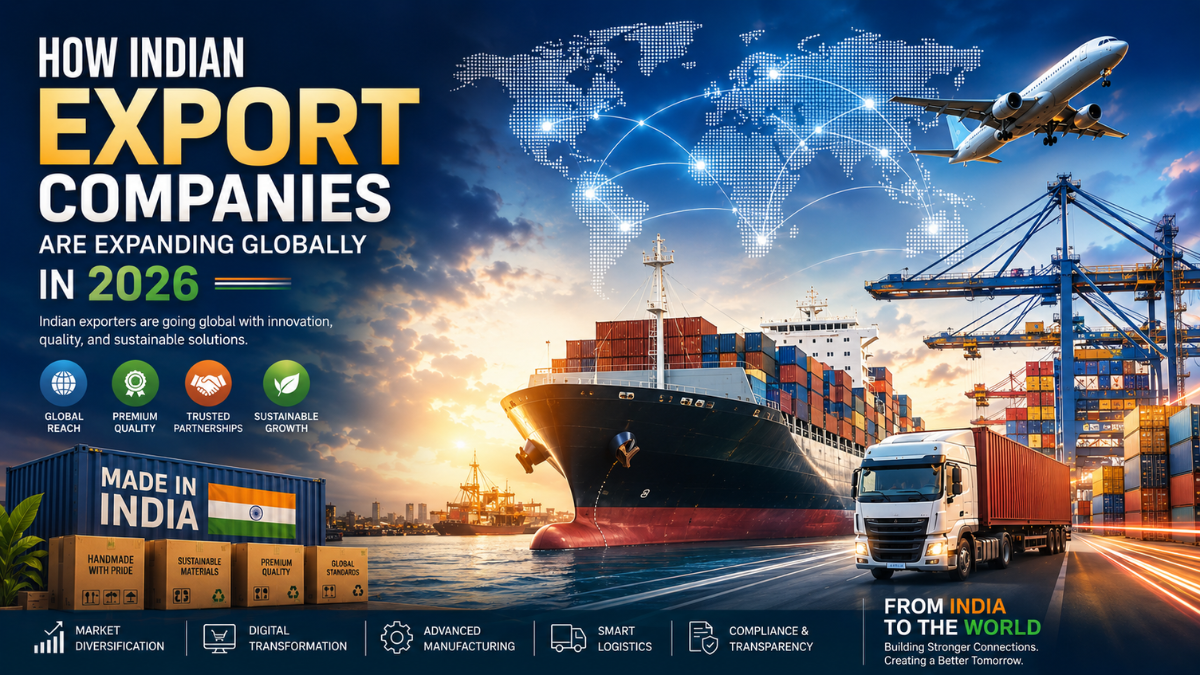
The year 2026 marks a defining chapter for India in the global trade ecosystem. What was once considered a cost-effective sourcing destination has now evolved into a strategic export powerhouse. Indian export companies are not only increasing their global footprint but are also transforming how international trade is conducted—through innovation, digitalization, and value-driven offerings.
The global export business landscape is shifting rapidly. Supply chains are being restructured, geopolitical dynamics are influencing sourcing decisions, and buyers are actively seeking reliable, scalable, and transparent partners. In this changing environment, Indian exporters are emerging as strong contenders, offering a compelling blend of quality, affordability, and adaptability.
This transformation is not accidental—it is the result of a decade-long evolution driven by policy reforms, infrastructure upgrades, and a new generation of globally minded entrepreneurs.
India’s Export Growth Story: From Volume to Value
India’s export sector has traditionally been associated with high-volume, low-cost production. However, in 2026, the narrative has shifted significantly. Export companies are now focusing on value addition, branding, and premium positioning.
Government initiatives like Make in India have strengthened domestic manufacturing, while Digital India has enabled exporters to integrate technology into every stage of their operations.
Today, Indian export companies are competing globally not just on price, but on:
Product innovation
Design excellence
Sustainability standards
Customer experience
Industries such as textiles, carpets, pharmaceuticals, engineering goods, and IT services are leading this transformation. For example, Indian carpet exporters are now supplying premium, design-driven products to luxury markets in Europe and North America, rather than just mass-produced goods.
Digital Revolution in Export Business India
Digital transformation is the backbone of global expansion for Indian exporters in 2026. Technology has eliminated many of the traditional barriers that once limited small and medium-sized businesses from entering international markets.
Online B2B platforms like Alibaba and cross-border selling programs such as Amazon Global Selling have democratized access to global buyers.
Exporters are now leveraging:
AI-powered demand forecasting to identify trending products in international markets
Blockchain technology to ensure transparency and traceability in supply chains
ERP systems for efficient inventory and order management
Digital marketing strategies to build global brand visibility
This shift has allowed even small export businesses in India to operate like international trade companies with global reach.
In addition, virtual trade shows, online buyer-seller meets, and digital catalogs have replaced traditional methods, making the export process faster, more cost-effective, and highly scalable.
Market Diversification: Expanding Beyond Traditional Regions
One of the smartest strategies adopted by Indian export companies in 2026 is market diversification. Instead of relying heavily on a few countries, exporters are expanding into multiple regions simultaneously.
Key markets include:
North America, driven by demand for high-quality and sustainable products
Europe, with a focus on eco-friendly and certified goods
The Middle East, offering strong opportunities in construction, textiles, and luxury goods
Africa, emerging as a high-growth market for infrastructure and consumer products
Southeast Asia, with increasing demand for Indian agricultural and manufactured goods
Trade agreements and diplomatic relations are playing a crucial role in facilitating this expansion. Exporters are also investing in understanding local cultures, regulations, and consumer preferences to tailor their offerings accordingly.
This localization strategy is helping Indian companies build stronger relationships and long-term contracts in global markets.
Building Global Brands: From Suppliers to Strategic Partners
In the past, many Indian exporters operated as anonymous suppliers. In 2026, this is changing rapidly. Companies are investing in branding, storytelling, and customer experience to establish themselves as global brands.
Exporters are focusing on:
Premium packaging and presentation
Consistent quality assurance
Strong online presence through websites and social media
Transparent communication with international buyers
This shift is particularly visible in industries like carpets, handicrafts, and fashion, where design and brand identity play a crucial role.
Indian export companies are no longer just fulfilling orders—they are building relationships, offering customized solutions, and positioning themselves as long-term partners in the global export business.
Logistics and Infrastructure: Enabling Global Reach
A critical factor behind the success of Indian exporters is the improvement in logistics and infrastructure. Efficient supply chain management is essential for competing in international markets, where delivery timelines and reliability are key.
Initiatives like PM Gati Shakti are transforming connectivity between manufacturing hubs, warehouses, and ports.
Key developments include:
Modernized ports with faster cargo handling
Improved road and rail networks
Integrated logistics parks
Digitized customs clearance systems
These advancements have significantly reduced transit times and operational costs, making Indian export companies more competitive globally.
Private logistics providers are also offering end-to-end solutions, enabling exporters to manage everything from production to delivery seamlessly.
Sustainability: A New Competitive Advantage
Sustainability is no longer optional—it is a key requirement in global trade. In 2026, Indian export companies are aligning their operations with international environmental and ethical standards.
Global buyers, especially in Europe and North America, are prioritizing:
Eco-friendly materials
Ethical sourcing practices
Fair labor conditions
Reduced carbon footprints
Indian exporters, particularly in sectors like textiles and carpets, are leveraging traditional techniques and natural materials to meet these demands.
This focus on sustainability is not only helping companies comply with regulations but also creating a strong brand identity in international markets.
Emerging Export Opportunities in 2026
The global market is evolving, and new opportunities are emerging for Indian export companies. Some of the most promising sectors include:
Sustainable home décor and handmade products
Organic and processed food exports
Health and wellness products, including Ayurveda-based goods
Engineering and industrial equipment
Technology services and software solutions
The growing demand for authenticity, quality, and sustainability is playing to India’s strengths. Exporters who can combine traditional expertise with modern innovation are gaining a significant advantage.
Challenges Facing Indian Export Companies
Despite the growth, the journey is not without challenges. Indian exporters must navigate:
Fluctuating currency exchange rates
Complex international regulations
Intense competition from countries like China and Vietnam
Supply chain disruptions
However, companies are becoming more resilient by adopting risk management strategies, diversifying markets, and investing in technology.
The focus is shifting towards long-term stability rather than short-term gains.
The Future of Global Export Business from India
Looking ahead, the future of Indian export companies appears exceptionally strong. The combination of government support, digital transformation, and global demand is creating a favorable environment for sustained growth.
India is positioned to become one of the leading players in international trade, not just in terms of volume but also in value and innovation.
Export companies that embrace change, invest in quality, and build strong global relationships will lead this transformation.
Conclusion
In 2026, Indian export companies are redefining the rules of global trade. They are no longer competing solely on cost—they are competing on quality, innovation, and trust.
The rise of digital platforms, improved infrastructure, and strategic market expansion has empowered Indian businesses to scale globally like never before.
For entrepreneurs and businesses looking to enter the export business in India, the opportunities have never been greater. With the right strategy, technology, and mindset, Indian exporters can not only participate in global trade but truly dominate it.
The world is no longer just a market for India—it is a stage where Indian export companies are performing, competing, and winning.